

CHRO
What AI Will Change in Your Workforce, and Why HR Hears It Last
Only 4 percent of AI use cases sit in HR's own domain, yet nearly all of them change somebody's job. Here is how HR can get involved before the decisions are made.
Every use case in MetroMinds describes how the work changes: which tasks shrink, which grow and which skills the role needs. Across a portfolio, that becomes a plan for HR and the business.
 PortfoliosWorkforce impactClaims HandlerDemo environment
Choose a job family, from operations and delivery to legal and corporate affairs, and read how AI changes the work in real use cases.
Use cases are linked to 209 business capabilities across three levels. Your portfolio shows which parts of the organisation it touches and which it leaves alone, so AI plans and enterprise architecture meet.
A capability is something the organisation does, regardless of who does it or which system supports it. That makes it a stable address for a use case while teams and applications change.
PortfoliosNorthstar Bank AI portfolioOrganisation impactDemo environmentOnly 4 percent of AI use cases sit in HR's own domain, yet nearly all of them change somebody's job. Here is how HR can get involved before the decisions are made.

Most AI training plans start with prompts. The MetroMinds Library shows that people mainly need judgement: checking sources, applying policy and recording decisions.
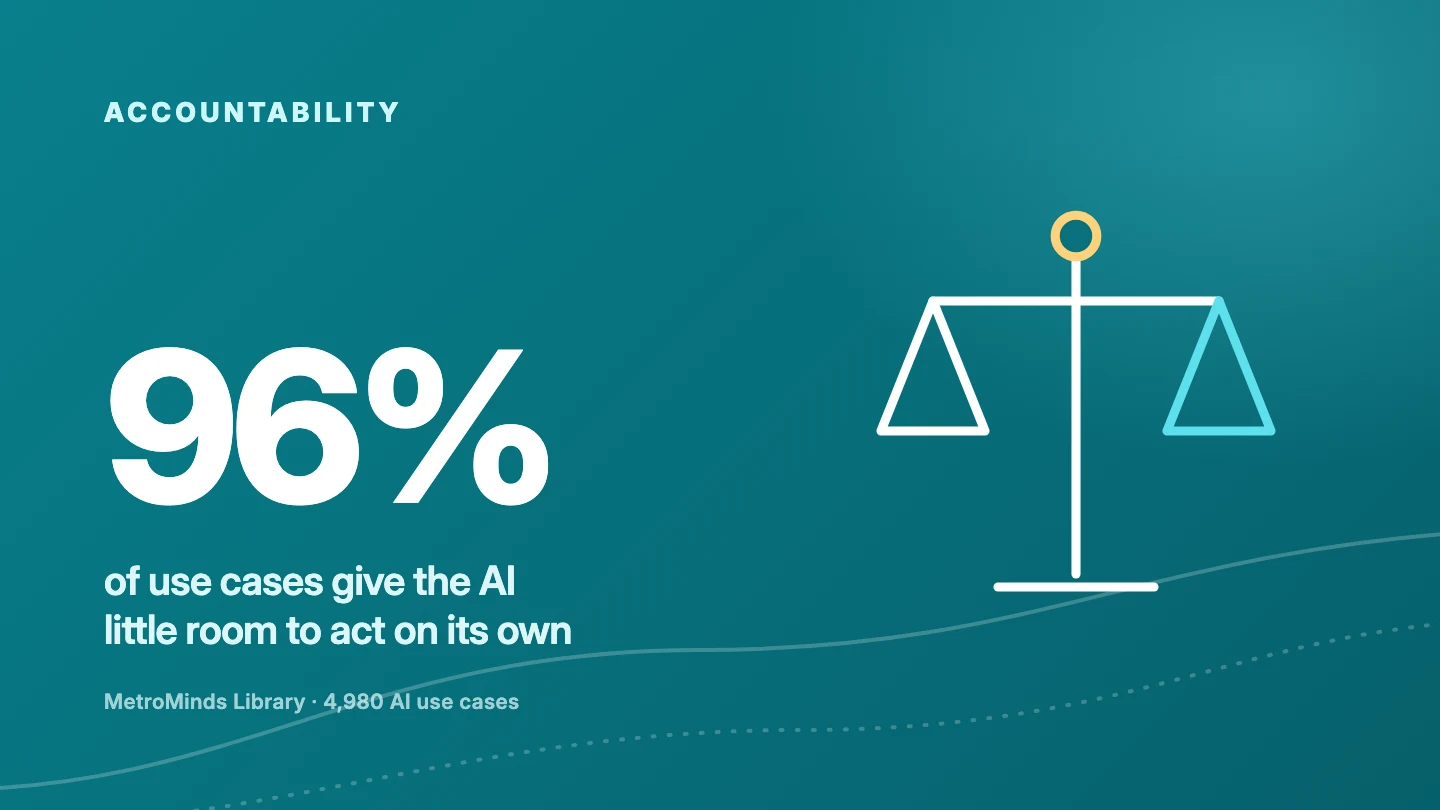
In 96 percent of AI use cases the AI prepares and a person decides. That makes the human in the loop a role that HR has to design, staff and support.
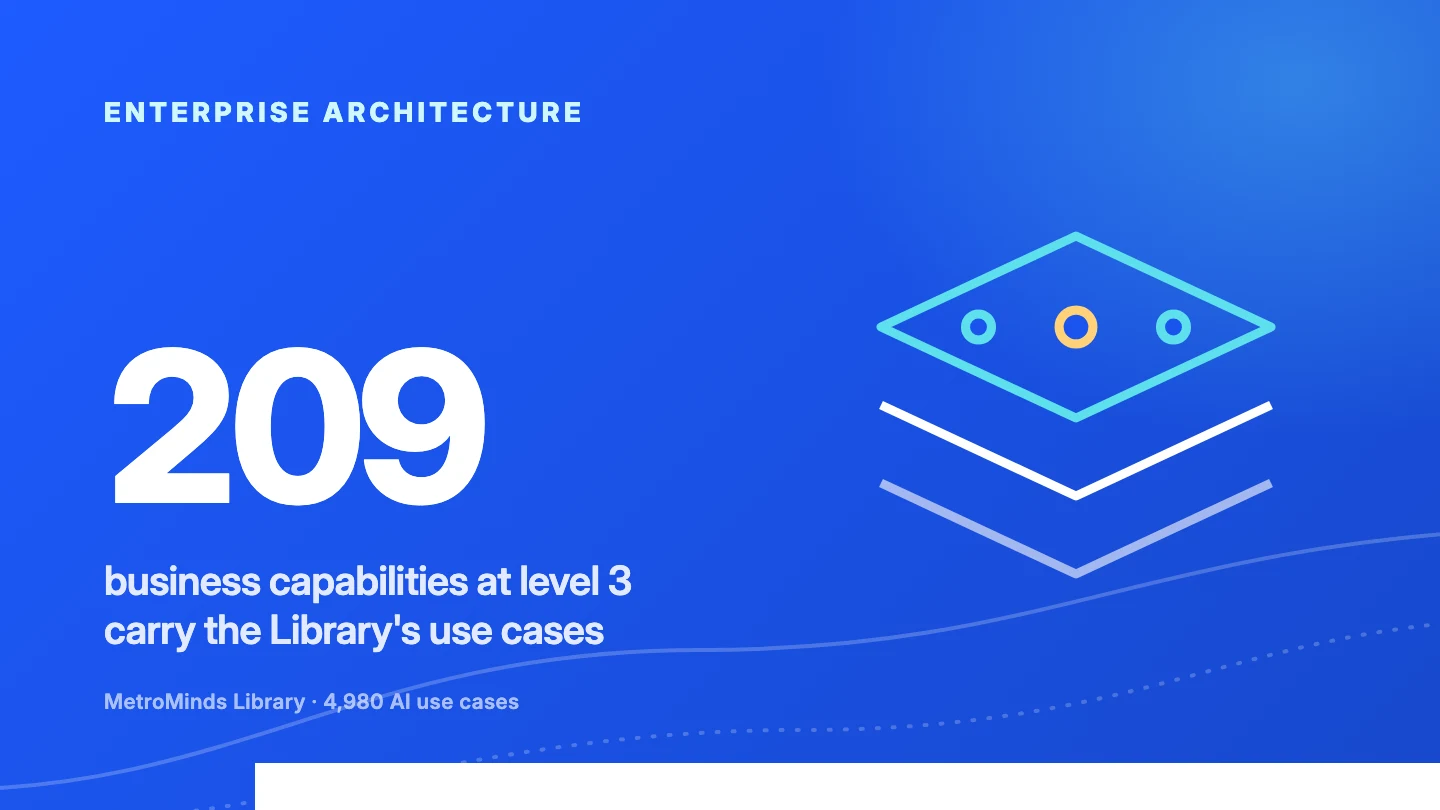
AI ideas cluster on a small part of the capability map. When architecture joins too late, organisations pay for the same integrations and data several times.