

01
What AI Will Change in Your Workforce, and Why HR Hears It Last
Only 4 percent of AI use cases sit in HR's own domain, yet nearly all of them change somebody's job. Here is how HR can get involved before the decisions are made.
AI decisions are usually made in IT and operations. The effect on tasks, roles and skills reaches HR last. MetroMinds records the workforce change for every use case, so you can plan it from the start.
Source: MetroMinds Library, 4,980 use cases, August 2026.
Each use case in MetroMinds describes what changes for the people involved: less manual searching, more reviewing and deciding. The portfolio adds this up per job family.
Skills are recorded per use case, so you can see which skills the approved portfolio will ask for and plan training before the system goes live.
Every use case names who reviews, who decides and who handles exceptions. That gives HR, works councils and managers one clear answer.
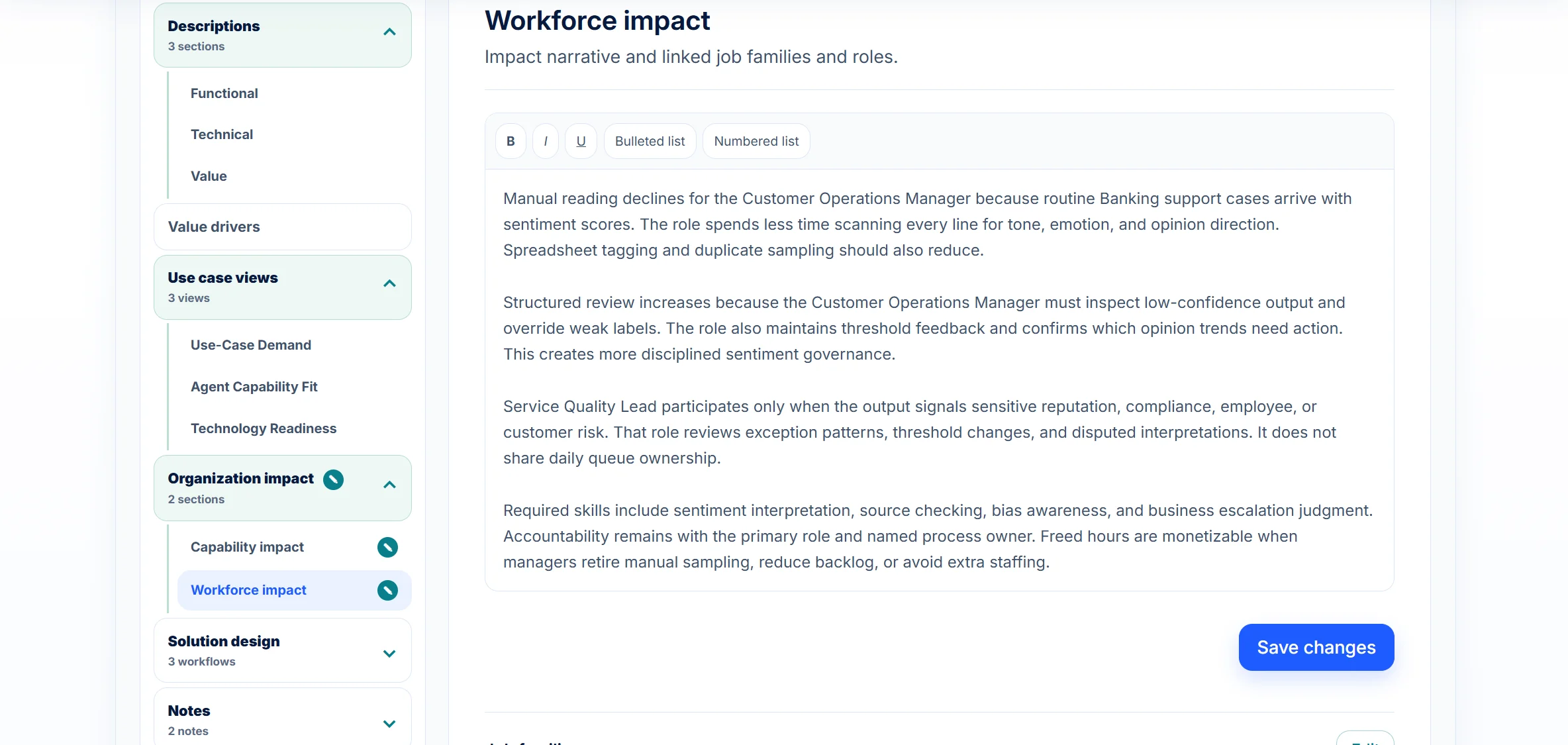
For each portfolio, MetroMinds shows which job families are affected, how the work changes and which skills come with it.
Choose a job family and an industry. You will see public use cases from the Library and how the work changes for the people in that role.
Only 4 percent of AI use cases sit in HR's own domain, yet nearly all of them change somebody's job. Here is how HR can get involved before the decisions are made.

Most AI training plans start with prompts. The MetroMinds Library shows that people mainly need judgement: checking sources, applying policy and recording decisions.
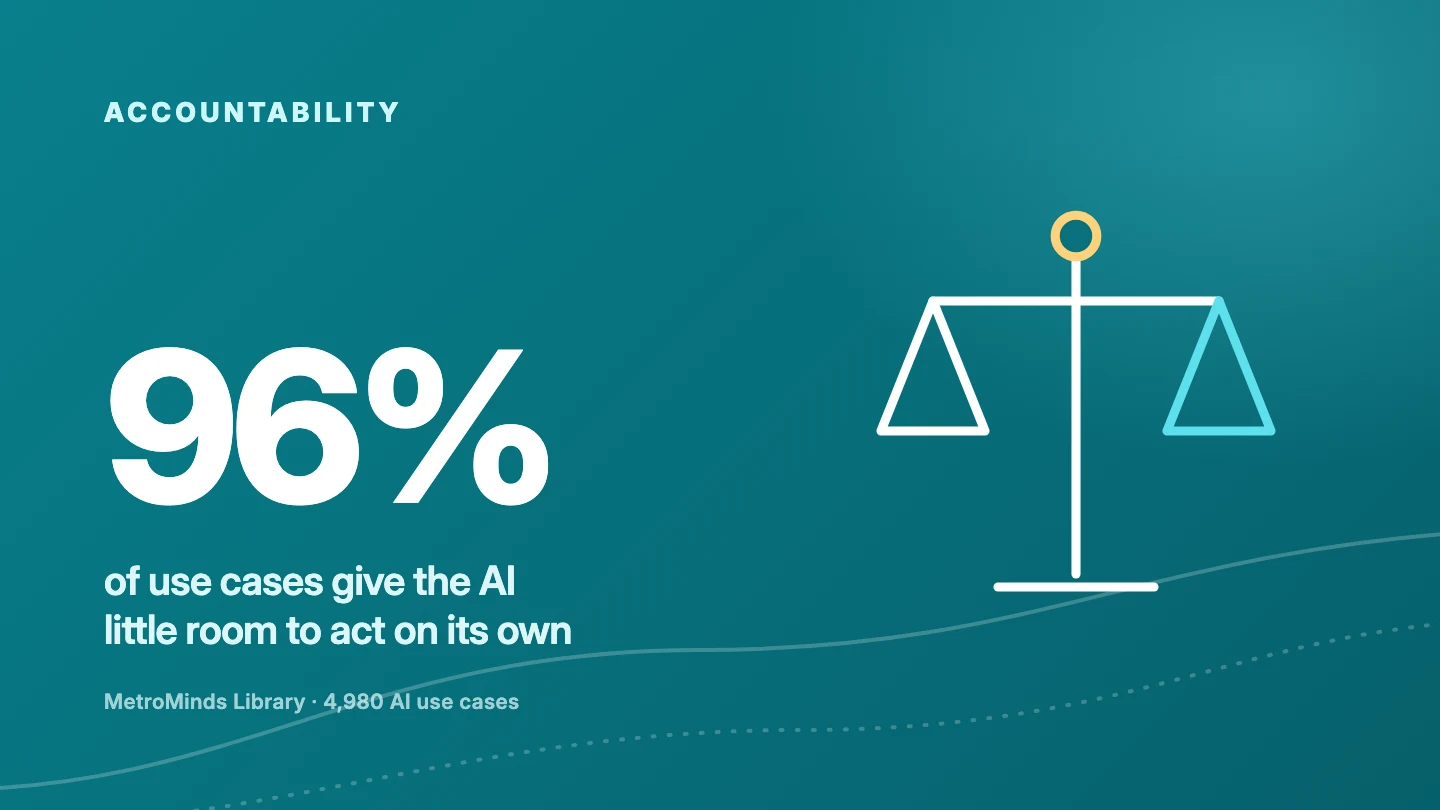
In 96 percent of AI use cases the AI prepares and a person decides. That makes the human in the loop a role that HR has to design, staff and support.
In 30 minutes we show how MetroMinds connects AI use cases to job families, skills and accountability.